TAO GROUP
19 Jan 2026
4 mins
Famous Buildings of India: The Finnish Embassy in New Delhi
Since it was established in the 1950s, New Delhi’s Chanakyapuri has become the home of some of India’s finest architecture. The Diplomatic Enclave has a prestige to it that few other neighbourhoods can match. But of all the buildings that line these streets, one stands out for its fascinating history and design: the Finnish Embassy.
Apart from it being a rare example of Indo-Finnish fusion architecture, it is a structure frequently featured in notable design magazines, and is often considered the most beautiful embassy in New Delhi. It also helps that its origin story features a power couple, a design competition, and a quiver of cobras. It began in 1963, when the Finnish government held a competition to decide who would build its embassy in New Delhi. The two countries had established friendly relations following India’s independence, but Finland’s embassy was still operating out of a five-star hotel.
The country was finally allotted a plot between the Swiss and Swedish embassies on Nyaya Marg in Chanakyapuri. This was a win-win situation. From Finland’s point of view, it was ideal to build an embassy beside two friendly countries. For Indian officials, there was a more practical benefit. The plot was overrun at the time by a pit of cobras; building an embassy there would finally stop the reptilian reign of terror. So, in 1963, Finland held “Snow Speaks From the Mountain” — a contest in which the country’s prominent architects and designers would battle it out for the bid. One team was made up of designers and newly-wed couple, Raili and Reima Pietilä. The duo are known today for creating some of Finland’s most prominent postcard properties, including the official residence of the country’s president.
For this particular bid, they submitted a design inspired by the snow-capped mountains of the Himalayas, and the ridges surrounding Lake Kitkajärvi in Northern Finland. The design went on to win the contest, but not everyone was convinced. Reports suggest the submission was rejected by Indian officials, who wanted a building that would blend in better with the surroundings. The bid was instead awarded to Lauri Silvennoinen, a pioneer of prefabricated elements. However, in the years that followed, the project faced several delays. All through the ‘60s and ‘70s, snakes continued to call the plot home, this time sharing the space with locals who would come there to drink. Silvennoinen died in 1969, putting the project on indefinite hold, while the Finnish embassy operated out of a plot in Golf Links.
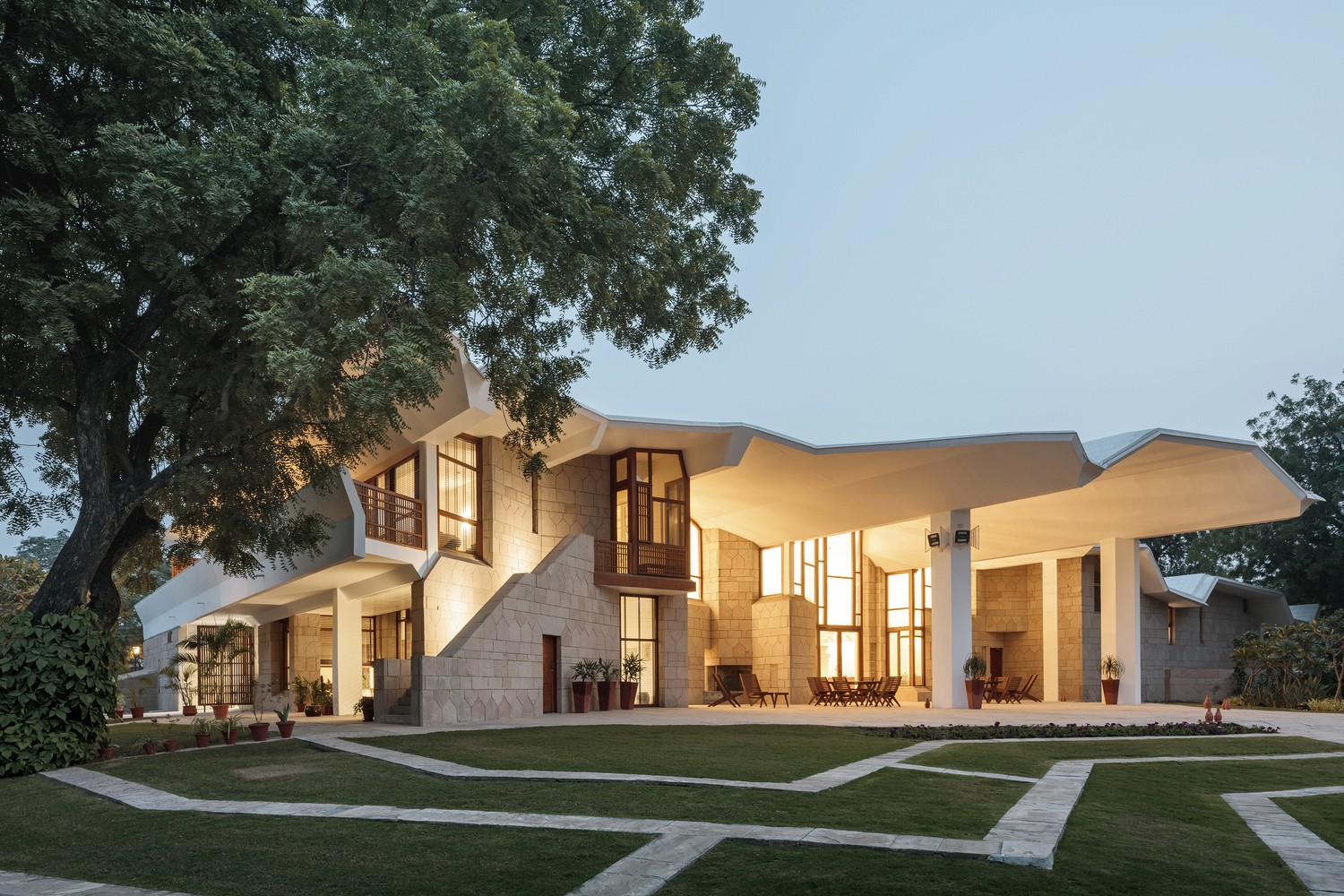
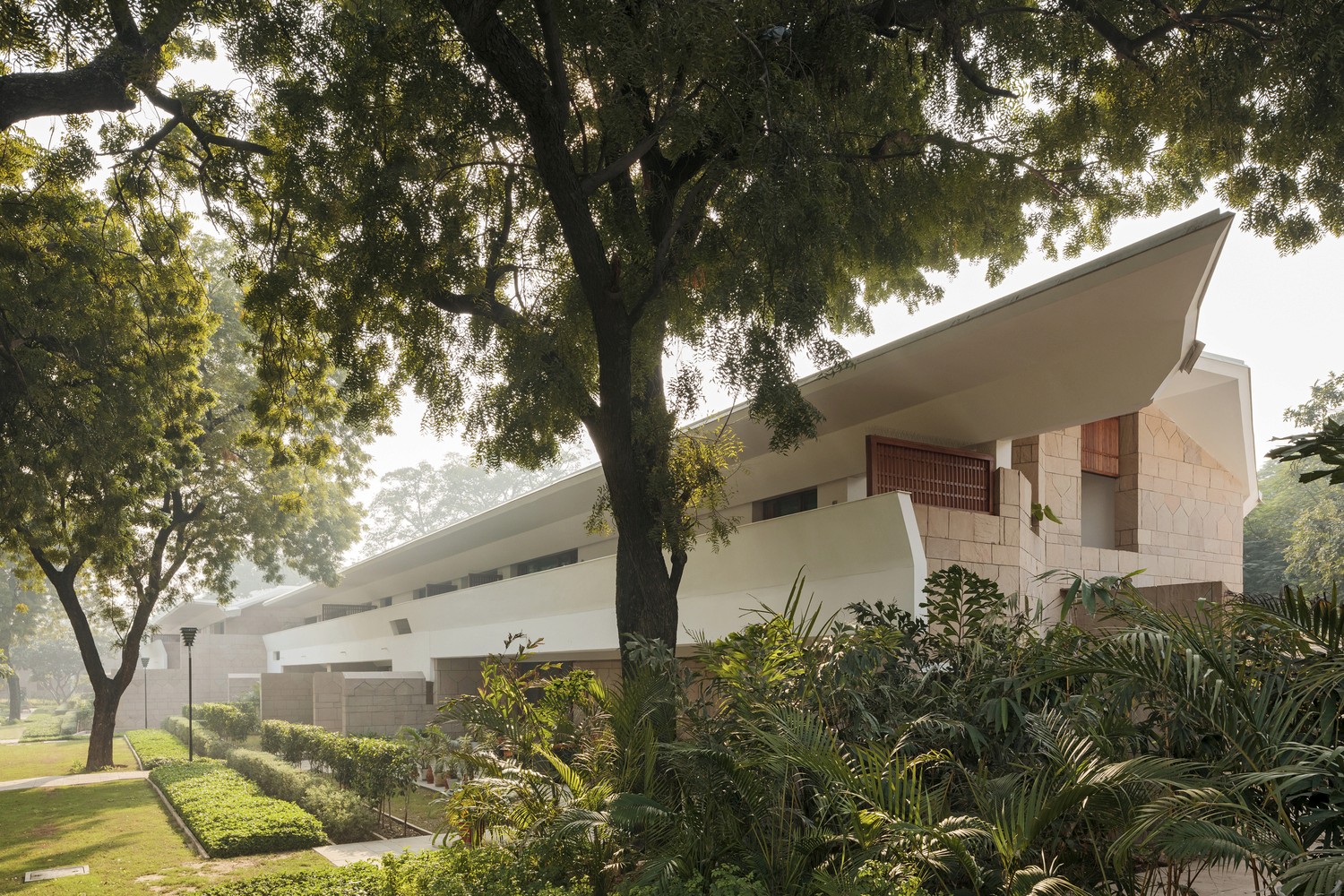
The Pietiläs, meanwhile, had gone on to make a name for themselves. The couple had spent the previous two decades taking on massive projects at home and abroad. Most notably, they were responsible for reviving and modernising parts of Kuwait, including a few of the country’s official ministries. In 1980, the now-renowned Pietilas were once again commissioned to work on their design. Six years later, the official Finnish Embassy as we know it today was created. Spread over nearly 4,500 square meters the building stands out for its sculptural roof, which is evidently influenced by snow-covered lakes and mountains. The couple later explained why this design worked well with Delhi’s climate too: “The metaphorical snow-white roof is both an extensive sun shelter and protection against monsoon rains. The roof shape fulfills two functions, metaphorical and practical — as might be expected in a good ‘genius loci’ [spirit of the place] form!”
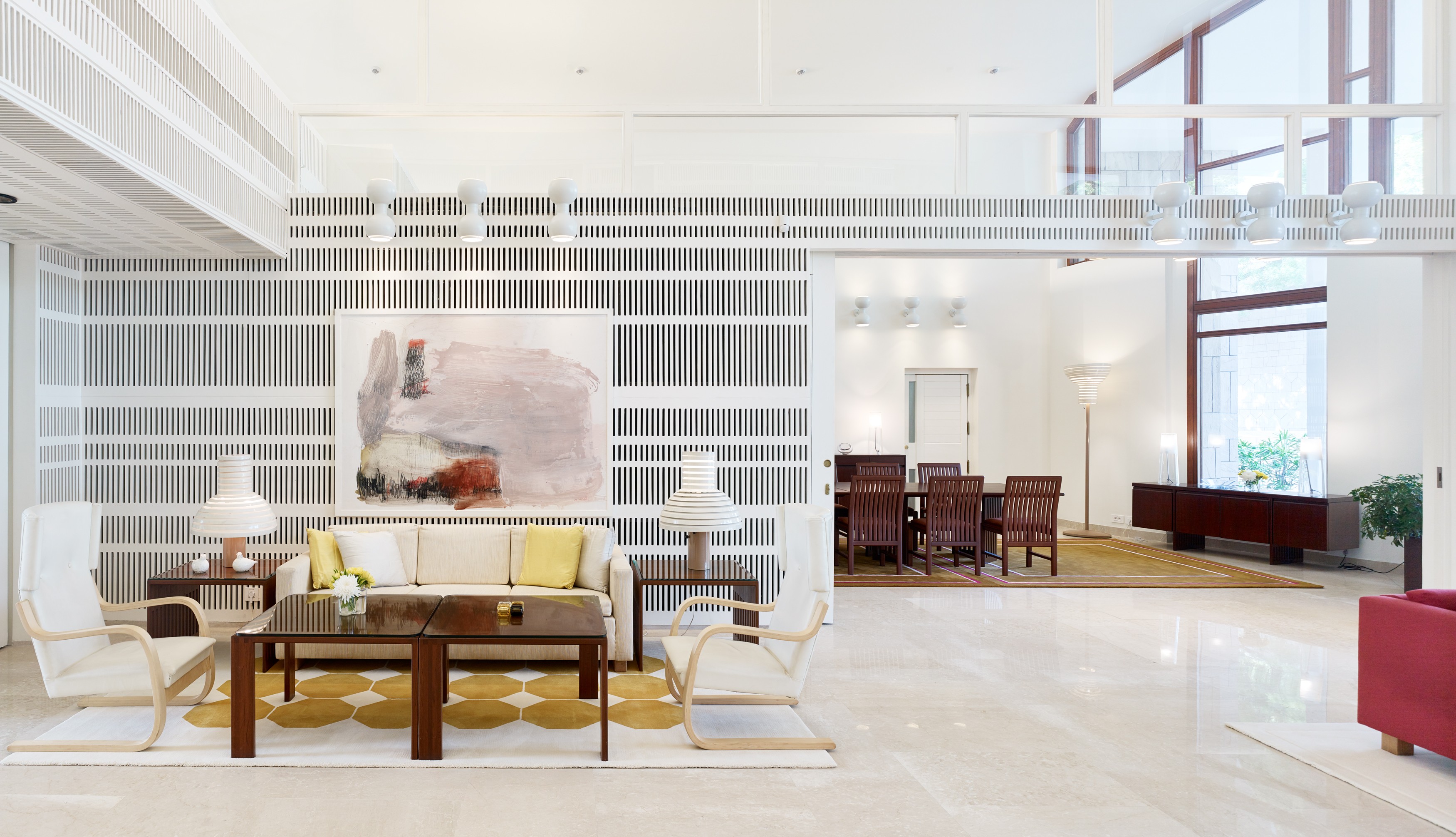
The facades of the building, meanwhile, have an Indian connect. Each one is made from locally manufactured sandstone tiles, white plastered bricks, and oiled teak. The interiors were initially put together by acclaimed Finnish designer Professor Antti Nurmesniemi, who custom-created all furniture, lamps, textiles, and rugs. In 2018, the building went through major renovations. Most major technical systems were overhauled, the entrance gates were upgraded, and large parts of the outdoors and indoors were restored, after taking a beating from decades of wind and rain. The firm tasked with the renovations — ALA Architects — also created two more residential buildings, a pool, and a gazebo with a small gym. Today, the compound is home to many separate structures, including the ambassador’s home, a visa services section, and a recreation centre with a sauna. Each building surrounds a central garden. But despite all the work that’s gone into it, the Pietiläs’ designs still stand out as a stunning example of Finnish modernism.